
A learning tower is a standing platform with rails around it, built so a toddler can stand at counter height next to you. Parents search for the best learning tower for toddlers because they want a child who can help at the counter, and a good tower can do that for years. Which tower is best depends on your child, your counter and your kitchen, so this article gives you a checklist you can apply to any model instead of a ranked list.
The checklist covers stability, adjustable height, guardrails, materials and the style that fits your space. It also covers the supervision habits that decide whether a tower is safe in daily use, because the product alone is never enough.
Why a learning tower beats a step stool for a toddler who wants to help
A step stool lifts a child by a few inches and leaves them to balance with nothing to hold. A toddler reaching across a counter on a step stool is leaning forward with their weight beyond their feet, which is when falls happen. The stool also puts the child at a height where the counter edge hits them at the wrong place, usually the belly or chest.
A learning tower raises the child to a working height and surrounds them with rails on several sides. The rails give small hands something to grip while they climb and while they stand. The child’s feet sit on a flat platform instead of a narrow step, so their weight stays over their base.
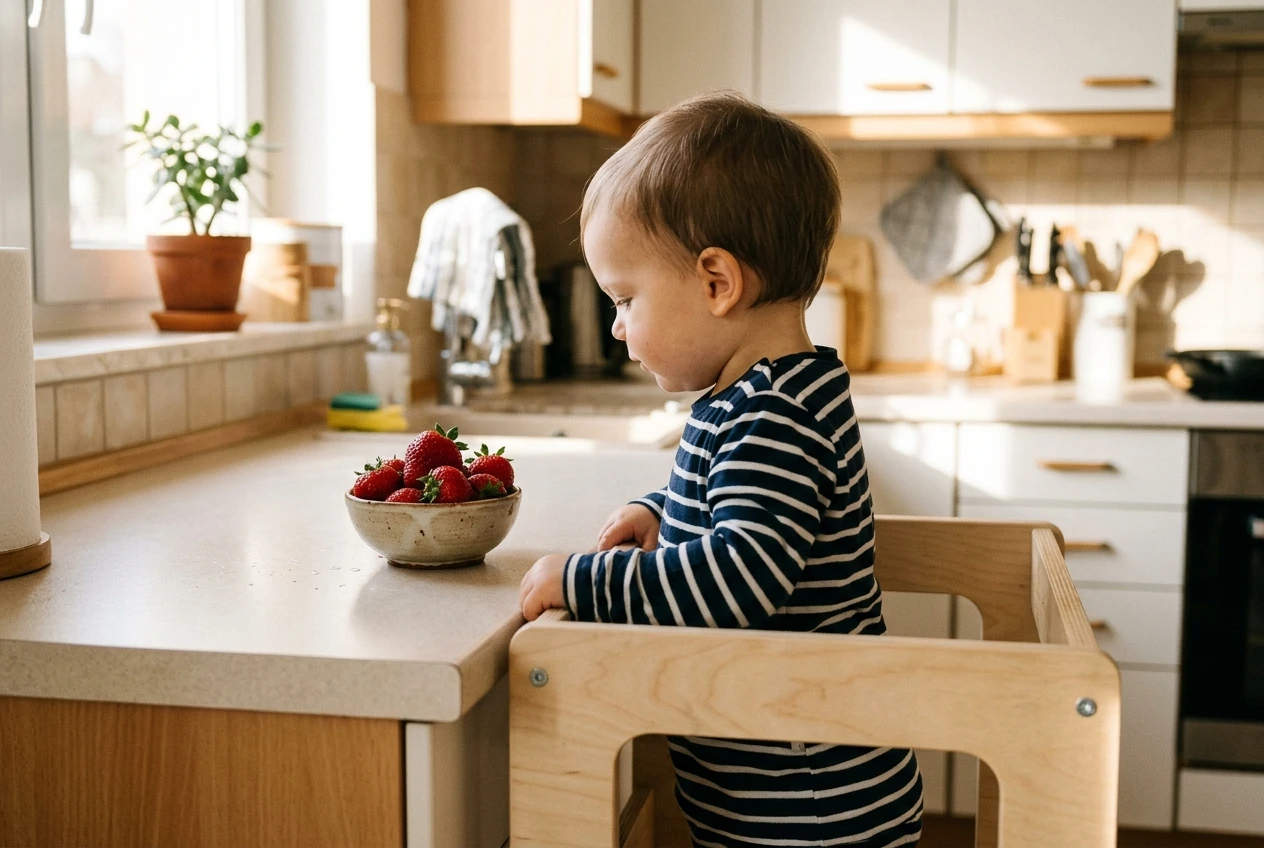
The other difference is purpose. A step stool gets a child up for a moment. A tower gives them a place to stay for ten or twenty minutes of washing, stirring or tearing, which is the length of time a real kitchen task takes. That is why a tower suits a toddler who insists on being part of dinner.
When your toddler is ready: the readiness signs to look for before you buy
Age alone is a poor guide. Many learning towers are marketed for children from about 18 months, but toddlers differ a great deal in balance and impulse control, and the manufacturer’s range is a starting point only. Watch your own child for these signs:
- They climb onto furniture and back down without help, and they do it carefully instead of in a rush.
- They can stand still on a raised surface for a minute or more without wobbling or sitting down.
- They follow a simple instruction such as “hold on” or “feet down” most of the time.
- They show interest in what you do at the counter, pulling at your leg or pointing at the bowl.
- They can tell you or show you when they want to get down, instead of simply launching themselves off.
If your child dives off ledges, ignores “stop” or climbs onto the tower sides, wait a few weeks and try again. Waiting costs you little. If you have concerns about balance or coordination in general, your pediatrician is the right person to ask, and our guide to cognitive development milestones for 2-year-olds can help you see what is typical at that age.
Stability first: base width, footprint and the tip test to run at home
Stability matters more than any other feature, because a tall platform with a child on it behaves like a lever. When the child leans to one side, the tower needs a base wide enough to keep its center of weight inside its feet.
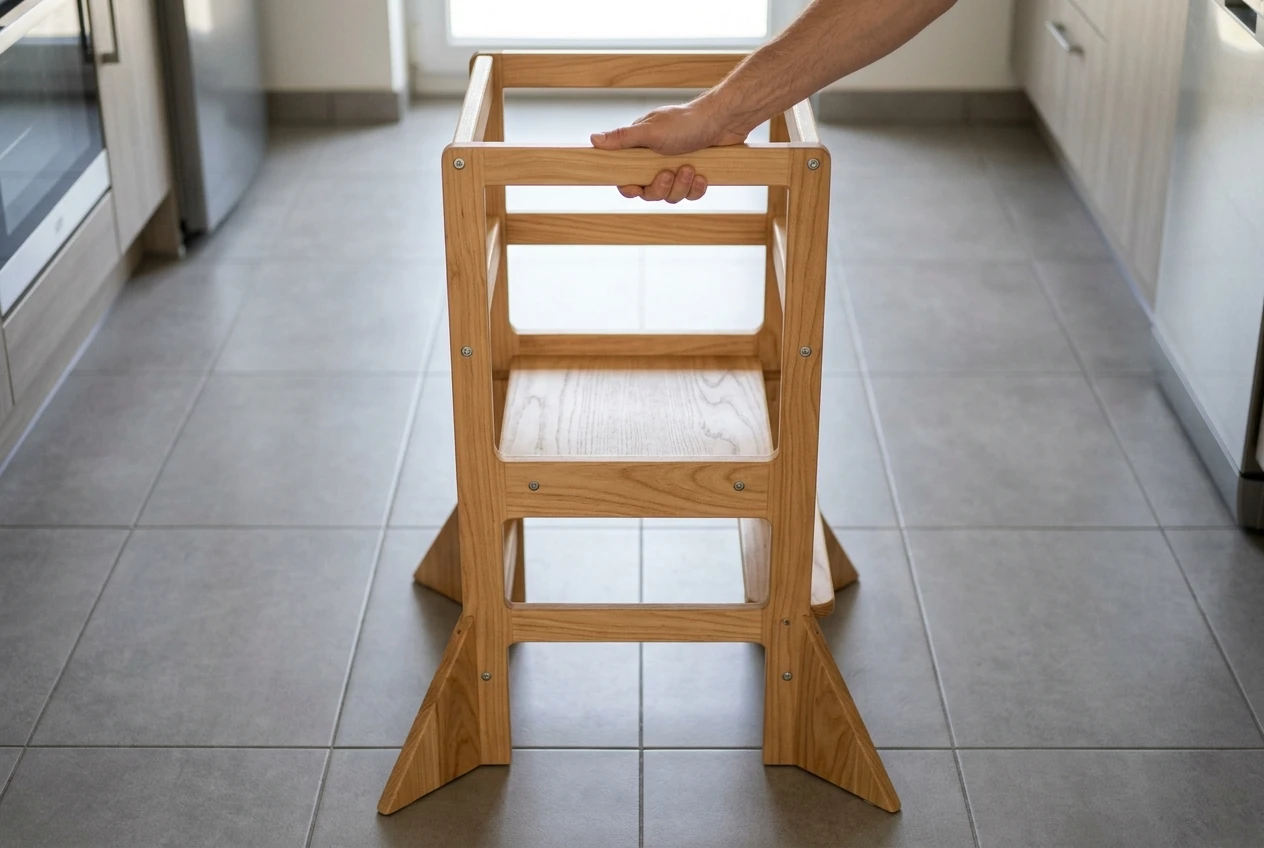
What to look at
Compare the footprint at the floor with the size of the platform at the top. A tower whose base is clearly wider than its platform, or that flares outward at the legs, is more resistant to tipping than one with straight vertical legs. Check that all four legs touch the floor at once, and look for non-slip feet on the bottom. Check the weight limit the manufacturer states, and make sure it covers your child with room to grow.
The tip test
Run this test at home once the tower is assembled, with no child on it:
- Put the tower on your kitchen floor, in the spot where it will be used.
- Set the platform at the highest height your child would use.
- Push firmly on the top rail from the front, from each side and from the back. The tower should resist and settle back, not rock onto two legs.
- Press down on the front edge of the platform, then on each corner, and see whether the tower lifts at the opposite side.
- Shake the frame gently and listen for loose joints.
Then repeat the test with the tower against the counter, since that is how it will actually be used. If the tower tips or twists at any point, it is the wrong tower for your kitchen, however well reviewed it is. Repeat the shake test every few weeks, because screws loosen with use.
Adjustable platform height and guardrails: matching the tower to your counter and your child’s growth
A fixed-height platform fits one child at one size, which is a short window for a toddler. An adjustable platform lets the tower grow with the child, and it also lets you fit it to your own counter. Counters vary in height, so measure yours before you buy and compare it with the platform positions the manufacturer lists.
Setting the right height
When your child stands on the platform, the counter surface should land at about their lower chest, near the height of their elbows when their arms are bent. Higher than that, and they have to lift their arms awkwardly to work. Lower, and they lean forward over the edge, which pushes their weight toward the counter.
Check how the platform adjusts. Some towers use pegs or sliding mechanisms and some use screws. Whatever the method, it should lock firmly in place and be impossible for your toddler to loosen. Ask yourself whether you could change the height in under a minute, because if it is a chore you will leave it too low or too high as your child grows.
Guardrails
The rails are the second safety system after the base. Look for these points:
- Rails on all sides your child could fall from, with the open side meant for climbing in.
- Rail height that reaches at least the middle of your child’s torso when they stand on the platform.
- Gaps between the slats too narrow for a head, hand or foot to pass through and get trapped.
- Smooth, rounded top edges that are comfortable to grip.
- Rails that stay firm when pulled and pushed, with no flex at the joints.
Rail height is another reason to pick a tower that fits your child now and not one they will grow into. A child who stands far above the rail has lost most of its protection.
Materials and finish: what to check for durability, splinters and non-toxic coatings
Most learning towers are made of wood or wood-based panels, though some use metal fittings or plastic parts. A tower that is used daily takes hard wear from climbing feet, wet hands and spills, so the build quality shows up quickly.
Run your hand over every surface before you put your child on it. Check for splinters, rough cut edges, sharp or protruding screw ends and uneven joints. Look closely at the platform, since that is where small feet and dropped utensils do the most damage. Corners should be rounded.
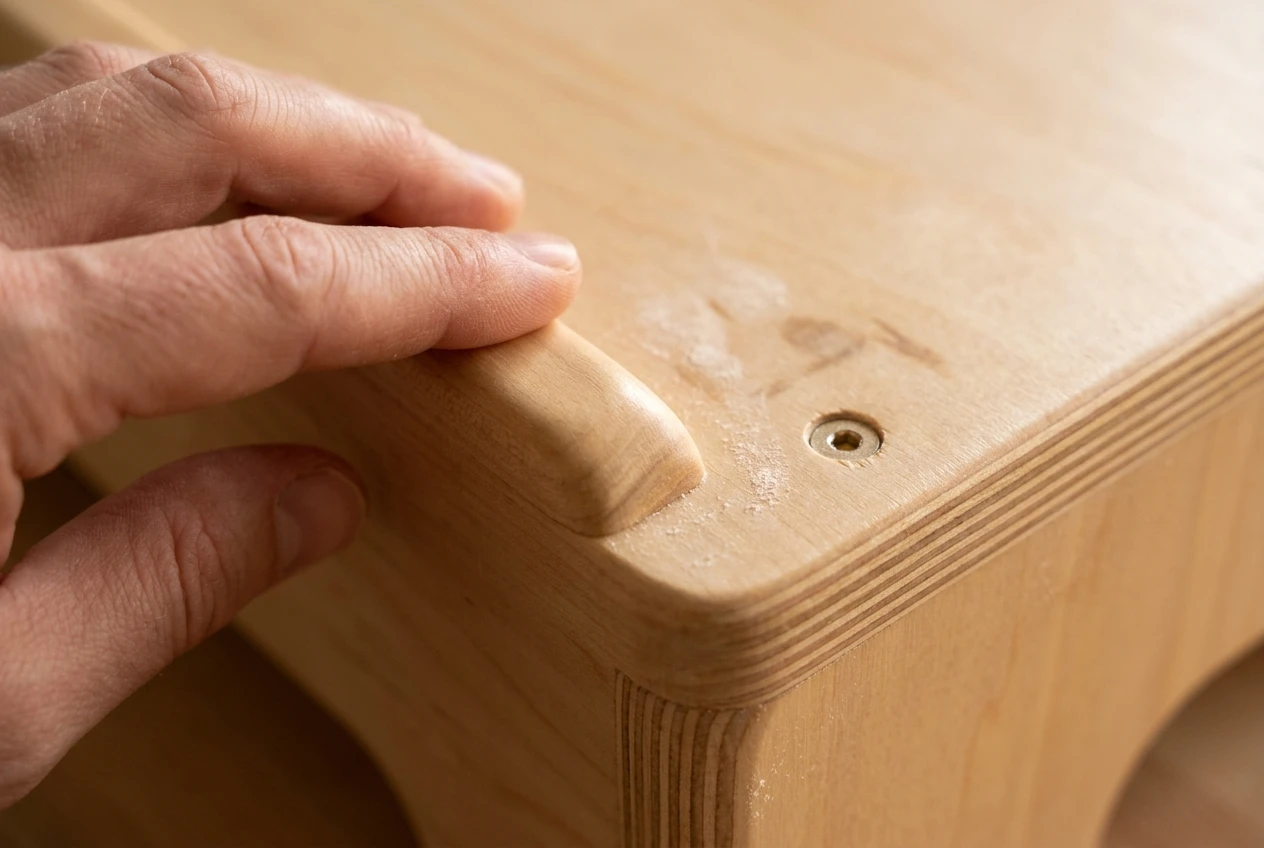
Finish matters because a toddler will mouth the rails and touch food with the same hands. Ask the seller what coatings and glues were used, and look for a statement that the finish is non-toxic and suitable for children’s products. If a brand makes safety claims but cannot say what testing stands behind them, treat the claims as unverified and weigh them accordingly. The listing is where to ask, and a good seller can answer in plain terms.
Think about cleaning, too. A kitchen tower will get wet, sticky and floury. A sealed finish wipes down easily, while bare wood can stain and may hold moisture. Whatever the surface, wipe spills quickly so the platform does not become slippery under bare or sock-covered feet.
Folding, open-frame or enclosed: which style suits your kitchen and your budget
The three common styles trade off storage, containment and cost differently. Compare them on your own space.
Folding towers collapse flat, which helps in a small kitchen where the tower has to live behind a door or in a gap between cabinets. The hinges and locks are the parts to check closely. They must click or lock fully when open and should not be something a toddler can fold by leaning or pushing. Run the tip test on the unfolded tower, and test the lock more than once.
Open-frame towers have rails on some sides and open gaps elsewhere. They are lighter and easier to slide across the floor, and the child can see more of what is happening in the kitchen. Because they are open, check the gap sizes carefully, and consider how well the structure resists twisting.
Enclosed towers have solid or near-solid panels around the platform. The panels can reduce the chance of a foot or arm slipping through, and they feel more secure to many children. They are usually heavier and harder to move, and they take up more floor space. That weight can be an advantage for stability, but it matters if you have to lift the tower often.
On budget, price usually reflects materials, adjustability and finish, but a higher price is not proof of a safer tower. Judge each candidate against the checklist above first, then compare prices among those that pass. A tower that passes the tip test and fits your counter is a better value than a more expensive one that does not.
Setting up the tower for safe kitchen tasks: where to place it, what jobs to give, and when to stay within arm’s reach
The tower makes helping possible. Your habits make it safe.
Where to place it
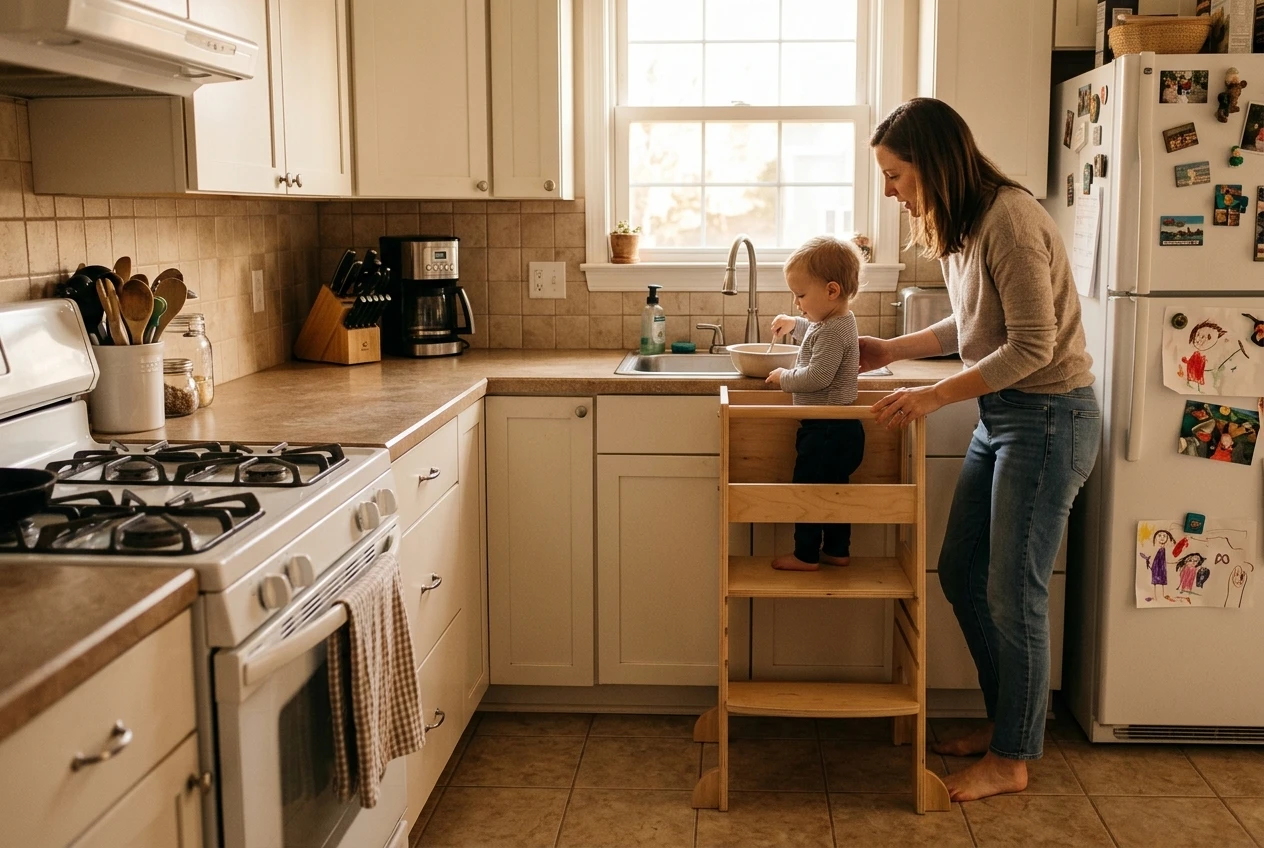
Put the tower on a flat, dry floor, with the open side facing you and the back against the counter or very close to it. Keep it away from the stove, the oven door, the toaster, the kettle and any hot surface. Move knife blocks, sharp tools and cords out of reach, since a child standing at counter height can reach farther than you expect. Keep the floor around the base clear of toys, mats that slide and puddles.
When to stay within arm’s reach
Stay within arm’s reach every time your child is on the tower. That means close enough to catch them, not just in the same room. Do not step away to answer the door or take a phone call. If you have to leave, lift your child down first.
Teach a routine for climbing in and out: hands on the rails, one foot at a time, and get down when you say so. Say the same words each time so the routine becomes familiar. Keep the tower for one child at a time, and do not let children jump, rock or climb on the rails from outside.
For a wider look at hazards in the rest of the home, see the guide linked at the end of this article. If your kitchen opens onto stairs or other rooms, the most recommended child safety gates for your home covers that side.
Kitchen jobs that build independence and fine motor skills, with a nod to your preschooler’s hand strength work
Once the tower is set up, give your child a task that matches their ability and keeps hot or sharp items out of the picture. Good starter jobs include:
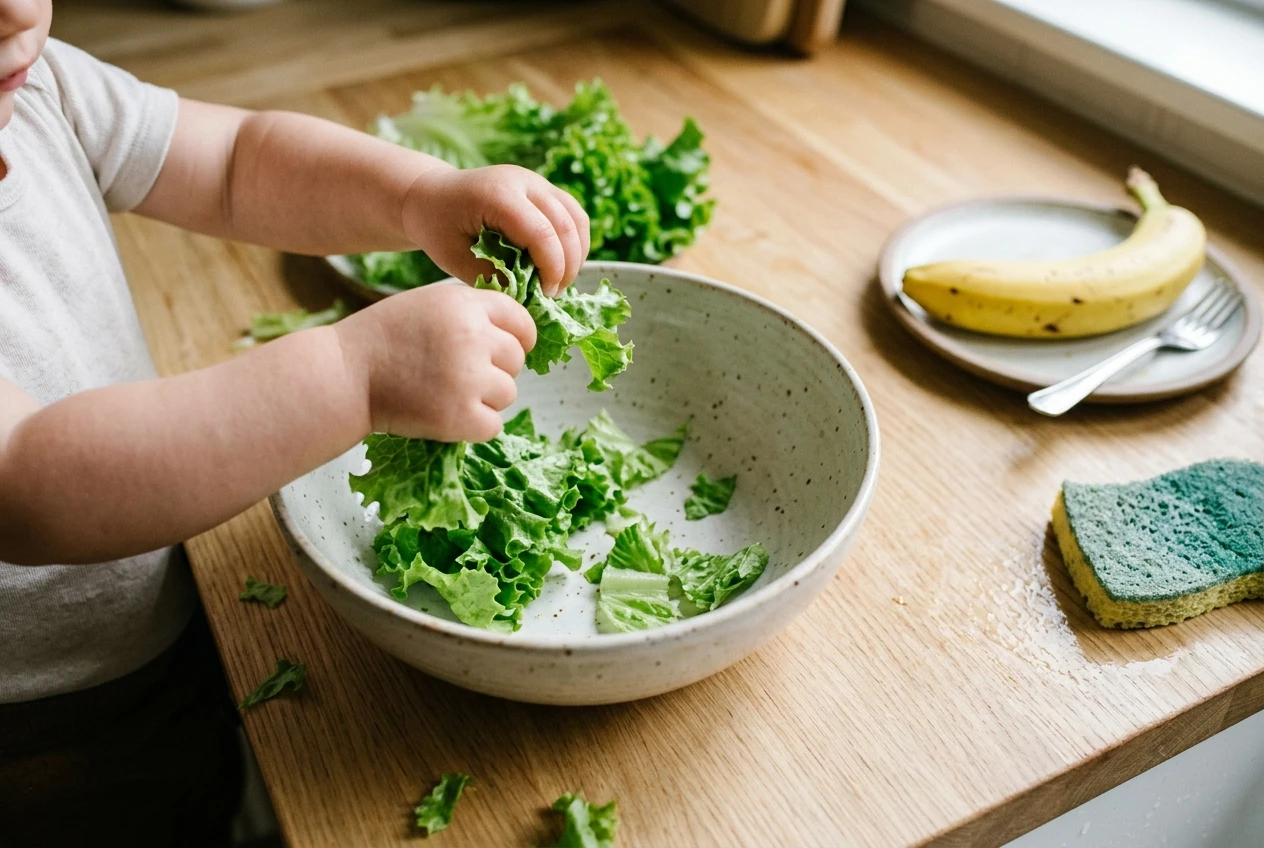
- Washing vegetables and fruit in a bowl of water.
- Tearing lettuce or herbs into pieces.
- Stirring cold ingredients, such as yogurt or batter, in a wide bowl.
- Mashing a ripe banana with a fork.
- Scooping and pouring dry ingredients from one container to another.
- Spreading soft butter or nut-free spreads on bread with a blunt spreader.
- Wiping the counter with a damp cloth.
Each of these uses small-hand skills: gripping, squeezing, pinching, pouring and wrist turning. Squeezing a sponge, tearing leaves and mashing with a fork also build the hand strength that later helps with holding a pencil and using scissors. If you are building these skills in an older toddler or preschooler, our DIY fine motor skill exercises for preschoolers at home offers more activities you can pair with kitchen time.
Let your child finish the job even if it is messy or slow. A child who pours the water in, even with spills, gains more from the task than one who watches you do it faster. Keep tasks short at first, and end the session when attention drifts, since a tired toddler is a less careful one.
Before you buy, run the stability and readiness checklist from this article at home, then read our guide to creating a safe child care environment to check the rest of your space.